Pembroke Pines Concrete Solutions

Expert Concrete Foundation Installation in Pembroke Pines, FL
The Critical Base for Every Strong Structure
All buildings and structures need a strong foundation to support their stability, safety, and longevity. The experienced staff at Pembroke Pines Concrete Solutions specializes in providing high-quality, professionally installed concrete foundation systems for residential and commercial developments across Pembroke Pines and other surrounding communities.
The foundation is likely the most important part of any development project. The foundation bears the total weight of the structure, helps resist the potential for ground movement and settlement, prevents moisture intrusion into the structure, and serves as a solid base upon which all other aspects of the structure depend. While poor foundation work can lead to costly structural issues with the structure, well-designed and properly installed foundation work will give you decades of problem-free operation.
Our experienced staff understands the engineering principles, local soil conditions, building codes, and construction best practices that differentiate between adequate foundations and superior ones. We provide precision foundation services starting from our first on-site evaluation until completion of the final inspection, so you may have peace of mind regarding the stability and safety of your structure.
We offer custom-designed foundation systems for every residential and commercial development project, regardless of whether it is the foundation for a new single-family dwelling, a room addition, a multi-story commercial building, a garage, or a shop. Our foundation design is specifically created based on your needs and exceeds the minimum expectations of the industry.
Get A Free Quote
Types of Concrete Foundations We Install
Customized Solutions for Every Application
Slab on Grade – Most Common Type of Foundation in Florida
One of the simplest types of foundations used in residential and commercial construction, a slab on grade is essentially a solid slab of concrete poured directly onto the ground. This can be an affordable and effective solution for most residential and some commercial projects.
Features of Slab on Grade Foundations
- Time & Cost Efficient – One Pour Construction; typically 4-6″ thick with thicker edges
- Load Distribution – integral footings around the perimeter distribute the weight evenly.
- Strength & Crack Control – steel reinforcing bars throughout the slab.
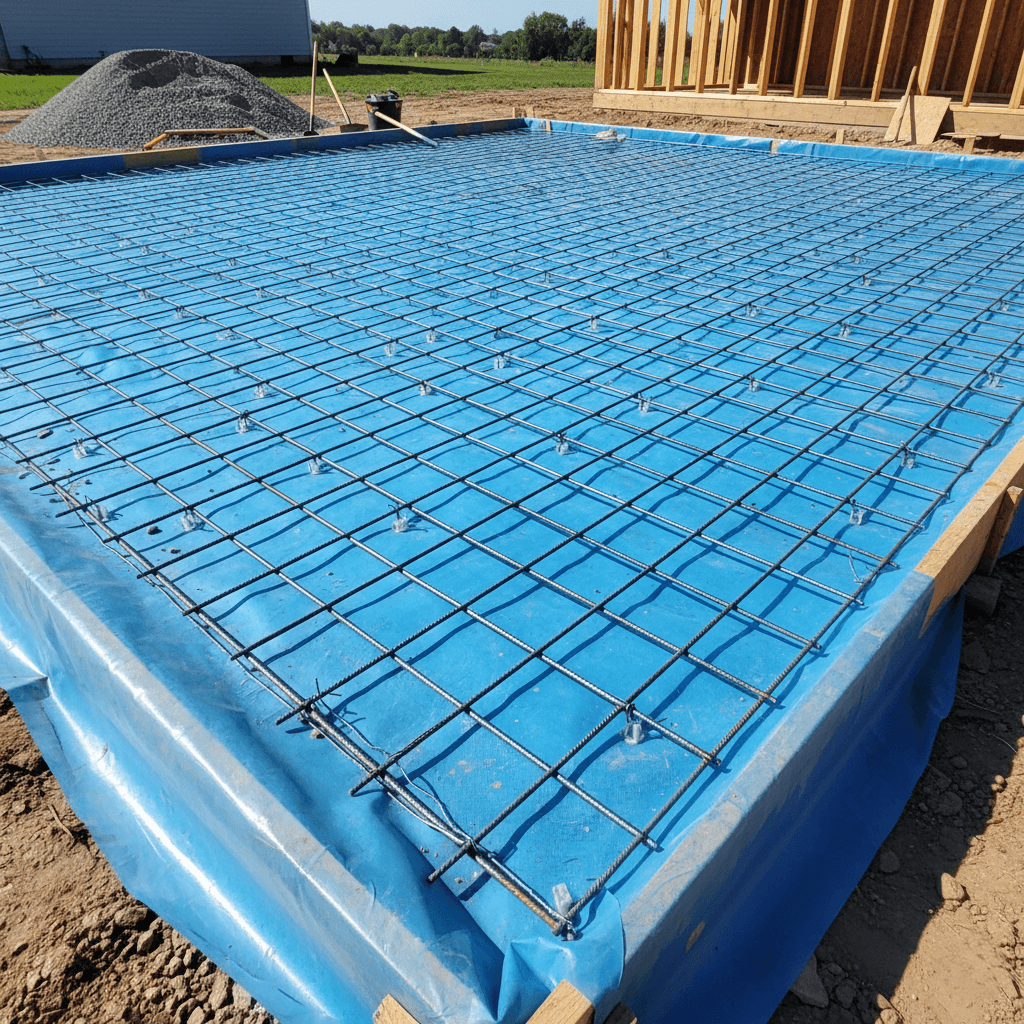
- Prevents Moisture Penetration – vapor barrier protects against ground moisture entering the building.
- Works Well With Florida Soil Conditions.
Useful For: Single-story homes, garages, workshops, home additions, and small commercial buildings.
Monolithic Slab Foundations
A monolithic slab is a variation of the slab on grade; however, instead of two separate pours of the footing and the slab, they are completed at the same time in one pour. The monolithic slab has thicker (12-18″) edges to handle structural loads, and thinner interior slabs.
Features of Monolithic Slab Foundations
- Faster Installation Time Than Separate Footing & Slab Pours
- Cost-Effective for Simple Structures
- Less Labor & Material Costs Compared To Separate Footing & Slab Pours
- Strong Perimeter Support for Load-Bearing Walls
- Performs Well In Stable Soil Conditions.
Useful For: Residential homes, detached garages, storage buildings, and small home additions.
Stem Wall Foundations
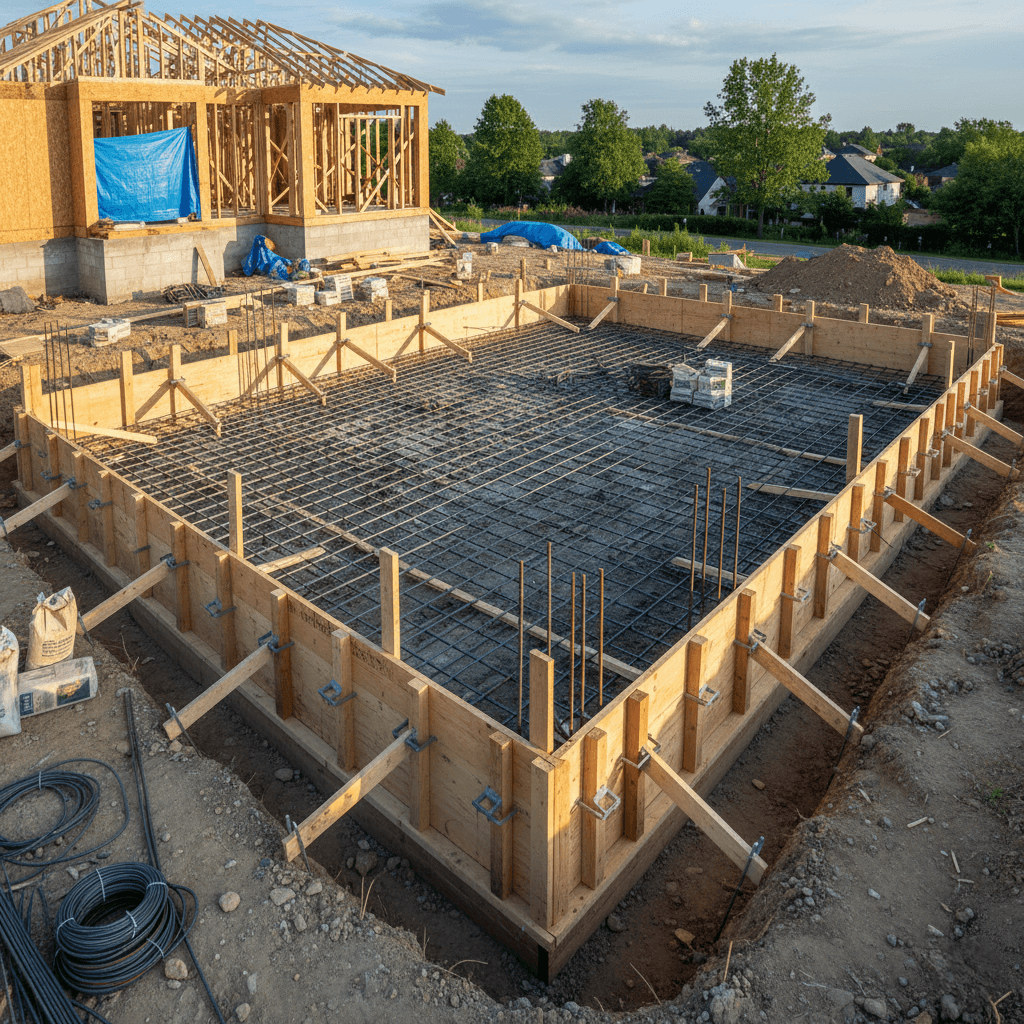
A stem wall Foundation consists of a concrete footing poured below the frost line (there isn’t much of a frost line in Florida) with either poured concrete or concrete blocks forming the stem wall, which elevates the structure above grade, and a separate slab of concrete is then poured inside the stem wall.
Features of Stem Wall Foundations
- Above Grade Elevation – provides better protection from flooding
- Crawl Space – allows for better utility access and ventilation
- Easier Plumbing & Electrical Access – as opposed to having to go through the slab.
- Better Suited for Sloping Sites
- Superior Protection Against Moisture
- Generally, More Expensive, However Provides Specific Advantages.
Useful For: Flooding-prone areas, sloping sites, need elevation, and expansive soils.
Soil Conditions and Foundation Design
Adapting to Pembroke Pines’ Unique Geology
Common Local Soil Types:
Sandy Soils: South Florida has a predominance of Sandy Soils. Sandy Soils in South Florida will allow for quick draining of water, but will also allow for less bearing pressure on structures. Therefore, foundations should be designed so as to provide enough surface area to distribute the weight of structures evenly.
[Image of sandy soil composition]
The Limestone Bedrock in South Florida: The Limestone bedrock in South Florida can be relatively close to the surface. This means when excavating for a new home or structure, you could run into limestone, which would require specialized equipment to remove safely. Once the limestone bedrock is reached, it provides an excellent bearing base.
Fill Soils: When building on previously filled properties, you need to pay extra attention to these areas. Filled areas often require additional compaction and possibly a longer footing to ensure stability of the home/structure being built.
Muck/Organic Soils: Muck or other organic materials will need to be removed and replaced with a suitable fill material. Organic soils are not suitable for supporting foundations due to their unstable nature.
Water Table: In South Florida, the high water table is something that needs to be considered during the construction process. Adequate measures to prevent water from entering the homes/buildings during the construction process must be implemented (i.e., dewatering). Waterproofing of the foundation must also be addressed, along with providing a sufficient drainage system to remove excess water.
Unique Property Considerations:
Each property is unique. Our years of experience dealing with local soil types and other geological aspects in this area enable us to identify potential issues, design solutions to these issues, and help our clients avoid problems caused by inexperienced builders.

Our Foundation Installation Process
Engineering Precision at Every Stage
Step 1: Initial Consultation and Site Evaluation: The process begins when our experienced personnel evaluate your project, review your plans and specifications, assess the soil and drainage conditions, evaluate accessibility to your site and the conditions found there, discuss your time frame and budgetary constraints, and evaluate the potential challenges you may face and/or special considerations that apply to your project.
Step 2: Engineering: For larger projects, we recommend performing a soil test to find out the soil’s bearing capacity, to identify the presence of any problem soils, to establish the correct size and depth for footings, and to provide assurance that the foundation design is compatible with the site conditions. Engineering designs will be created to meet the structural needs of the project.
Step 3: Obtain Permits: Obtaining building permits is required prior to doing foundation work. We prepare the necessary documents, submit the plans to the appropriate building department, schedule and arrange for inspections, and comply with all local regulations.
Step 4: Prepare Site/Excavate: Preparation of the site is very important. We will clear the land, level the land, dig trenches to the required depth for the footings and slab, remove unsuitable soil or organic material, set up the proper grade and elevation, and lay down the necessary drainage systems.
Step 5: Place Footings (If Applicable): When using a stem wall type foundation or another type of foundation that requires footings, footings are placed first. We will excavate the trenches to the required depth and width, lay down and compact the gravel base, install the steel reinforcement according to the engineering plan, pour the concrete to the required strength, and allow the concrete to properly cure before continuing with the next step.
Step 6: Build Form & Install Reinforcement: Accurate dimensioning of the formwork is achieved through precise construction of the formwork. We will build the forms to the exact specifications, check for level and squareness, install the rebar or wire mesh reinforcement according to the engineering plans, position the reinforcement at the correct height with sufficient concrete cover, and inspect the forms carefully before placing the concrete.
Step 7: Lay Plumbing & Utilities: Before laying the slab, we will coordinate with the plumber to perform their under-slab installation(s), lay down and install the required electrical conduit(s) or sleeve(s), ensure that they have been placed correctly and protected, verify that all penetrations into the slab will be covered by concrete before it cures, and conduct a pressure test of the plumbing system.
Step 8: Apply Vapor Barrier: Vapor barrier application is an essential part of protecting against moisture damage. We will install a heavy-duty polyethylene vapor barrier (minimum 10 mil thick), properly overlap the seams so that there is enough lapping, seal the penetrations for plumbing, and extend the vapor barrier beyond the edge of the slab for continuous protection.
Step 9: Pour Concrete: Concrete quality is a key factor in the performance of foundations. We will utilize the designated concrete mixture design (usually 3,000-4,000 PSI), systematically place the concrete to avoid cold joints, thoroughly consolidate the concrete to eliminate voids, screed the surface to the correct slope and elevation, and complete the placement process as quickly as possible to promote uniform curing.
Step 10: Finish & Cure: Following concrete placement, the concrete must cure properly. We will finish the surface of the concrete to the intended use, protect the concrete from excessive moisture loss, provide proper curing conditions, prevent premature load application, and wait until the concrete develops the necessary strength before allowing construction to continue.


Foundation Problems We Prevent
Why Proper Installation Matters
Minor Hairline Cracks in a Concrete Foundation: Hairline cracks in a foundation can be common, but when a crack in a foundation becomes large enough that you can see it from across the room or even use your hand to measure how wide it is, there is likely something wrong with the installation of the foundation. We will avoid problematic cracking by properly preparing the soil before pouring the foundation, providing adequate reinforcement, using the right type of cement mix for the job, allowing the foundation to cure (dry) correctly, and strategically placing joints in the foundation.
Settling of the Foundation: Differential settlement (one part of a house settles at a different rate than another part of the house) can cause major structural problems to occur within a home. We will minimize the risk of differential settlement occurring during the installation of a foundation by thoroughly compacting all of the soil before laying the footings of the foundation, removing any unsuitable materials (such as clay or silt) that could cause the foundation to settle unevenly, designing and building the footings of the foundation deep and strong enough to provide adequate support, making sure that the footing of the foundation is built on top of an adequate amount of prepared base material, and managing the amount of moisture in the soil properly.
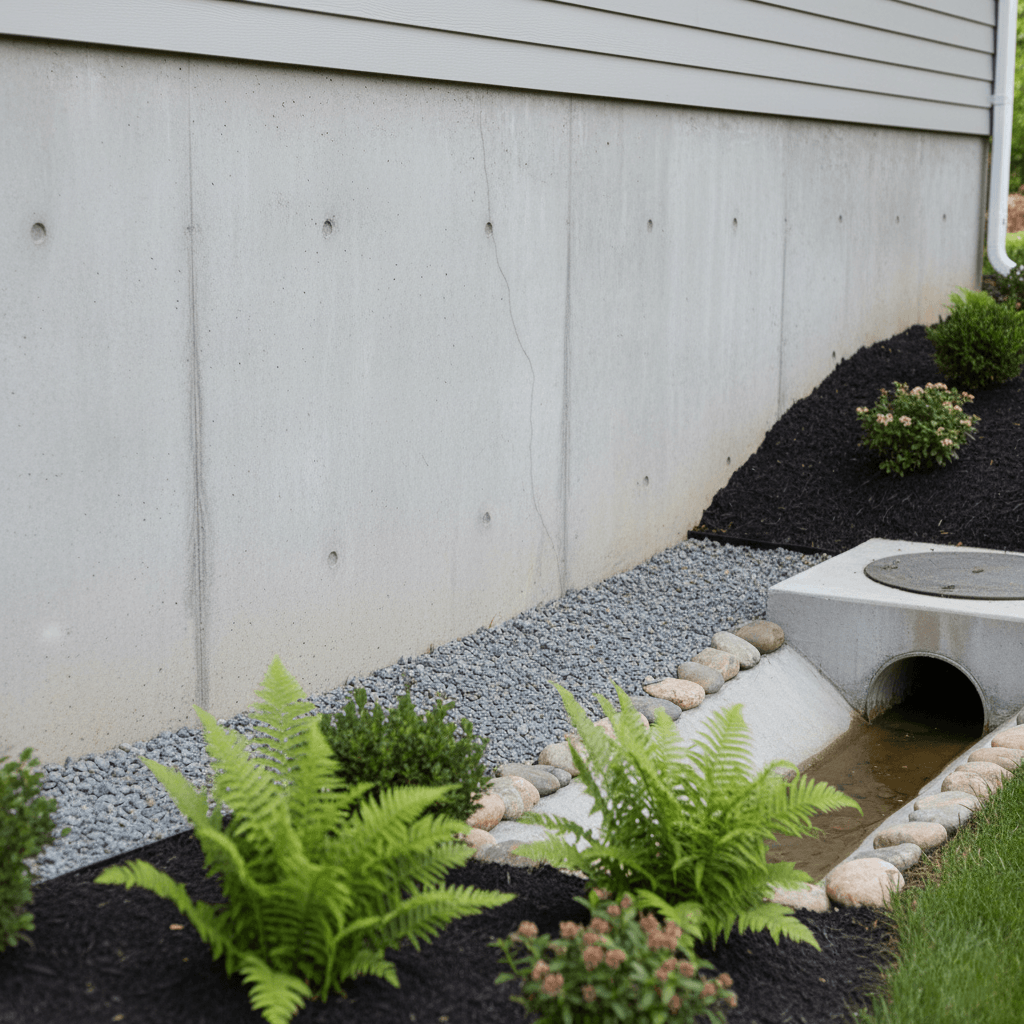
Moisture Problems Within a Home’s Foundation: Water that enters a home’s foundation through cracks in the walls, poor drainage around the foundation, or because of other water-related issues can cause mold to grow inside the home, damage the home’s structure, create unhealthy living conditions, etc. We will minimize the risk of moisture problems developing within a home’s foundation by installing a high-quality vapor barrier along the entire length of the foundation wall (this helps to prevent moisture from entering into the basement), by installing a drainage system around the perimeter of the home that directs water away from the home (not toward the home), by applying waterproofing to the areas of the foundation that require such protection, by ensuring that the ground surrounding the foundation is graded so that it slopes away from the home, and by doing everything possible to build the home’s foundation in the best way possible.
Structural Issues with a Home’s Foundation: A foundation that is either too small for its intended load or inadequately reinforced to carry those loads will eventually fail to do so, which means that the foundation may begin to crack, shift, and potentially collapse. We will ensure that a home’s foundation has sufficient size and reinforcement to support its intended loads by hiring qualified engineers to design the home’s foundation based upon the specifics of the site, building the home’s foundation according to local building codes, constructing the home’s foundation with adequate thickness and reinforcement, using concrete that has been cured (dried) to the recommended compressive strength to resist failure due to stress caused by heavy loads placed upon the foundation, and performing regular and thorough inspections of the home’s foundation to catch any potential problems early in their development.
Foundation Maintenance and Monitoring
Protecting Your Investment Long-Term
Ongoing Inspection: Look for indicators of potential structural damage such as cracks in walls or floors, doors that will not open or close correctly, uneven floor surfaces, gaps between trim, molding, and walls, and cracks or separation on the outside of a structure. The sooner you find out there is an issue with the foundation, the less likely it is to develop into a larger problem.
Maintenance of Drainage Systems: Ensure that your gutter systems are free of debris and functioning as they should, ensure that there is proper slope around the base of the foundation, do not allow water to accumulate near the foundation, extend the downspout beyond the foundation of the house, and check for any erosion or drainage problems.
Controlling Moisture Levels: Monitor and control the humidity in any crawl space if applicable, provide proper ventilation to help reduce moisture in the crawl space, fix any plumbing leakages immediately, inspect the condition of the vapor barrier, and look for any signs of excessive moisture.
Care for Landscaping Around the Foundation: Do not plant large trees too close to your home’s foundation. The general rule is that the tree needs to be planted as far back from the home as the tree will grow when mature. Do not plant plants that have high watering requirements near your home’s foundation, keep the moisture level of the soil around your home consistent, and watch for roots growing under the home.
Knowing When to Contact a Professional: If you notice any of the following; significant cracking (greater than 1/4 inch) in walls or floors, settlement or heaving of the foundation, water entering the crawlspace or showing signs of excessive moisture, door and window operation has changed, or any other concern related to the performance of the foundation, contact professionals who specialize in foundations.
The Foundation of Your Dream Project
Start with Expert Foundation Installation
Every successful construction project begins with a solid foundation. Don’t compromise on this critical component—choose Pembroke Pines Concrete Solutions for foundation installation you can build on with confidence.
Contact us today to discuss your project, receive expert guidance on foundation options, and get a detailed estimate for your residential or commercial foundation installation.