Pembroke Pines Concrete Solutions

Professional Concrete Slab Installation in Pembroke Pines, FL
Build on a Solid Foundation with Expert Slab Installation
When you need a solid, flat, and strong base for your project, there isn’t anything better than a concrete slab installed by a professional. At Pembroke Pines Concrete Solutions, our company specializes in high-quality installations of concrete slabs for a variety of applications, including residential projects such as a shed or garage, and commercial projects such as warehouses, equipment pads, etc.
While pouring cement can create a concrete slab, it is much more than that – it is an engineered system with many parts, which include: properly prepared site, specified thickness, appropriately sized and placed reinforcement, and finished to perfection. Our skilled staff knows all of the details that are crucial between a slab that will last decades versus one that will crack, shift, and/or fail early on.
Regardless of whether you are preparing a base for a new structure, providing a work area with a workshop floor, establishing a pad for heavy equipment, or constructing additional storage, we provide slabs that have been engineered to support your specific load needs and will stand up to time. We also inspect each slab at the completion of the installation to confirm that it was produced according to the highest standards of quality and performance.
Get A Free Quote
What is a Concrete Slab?
The Foundation of Functionality
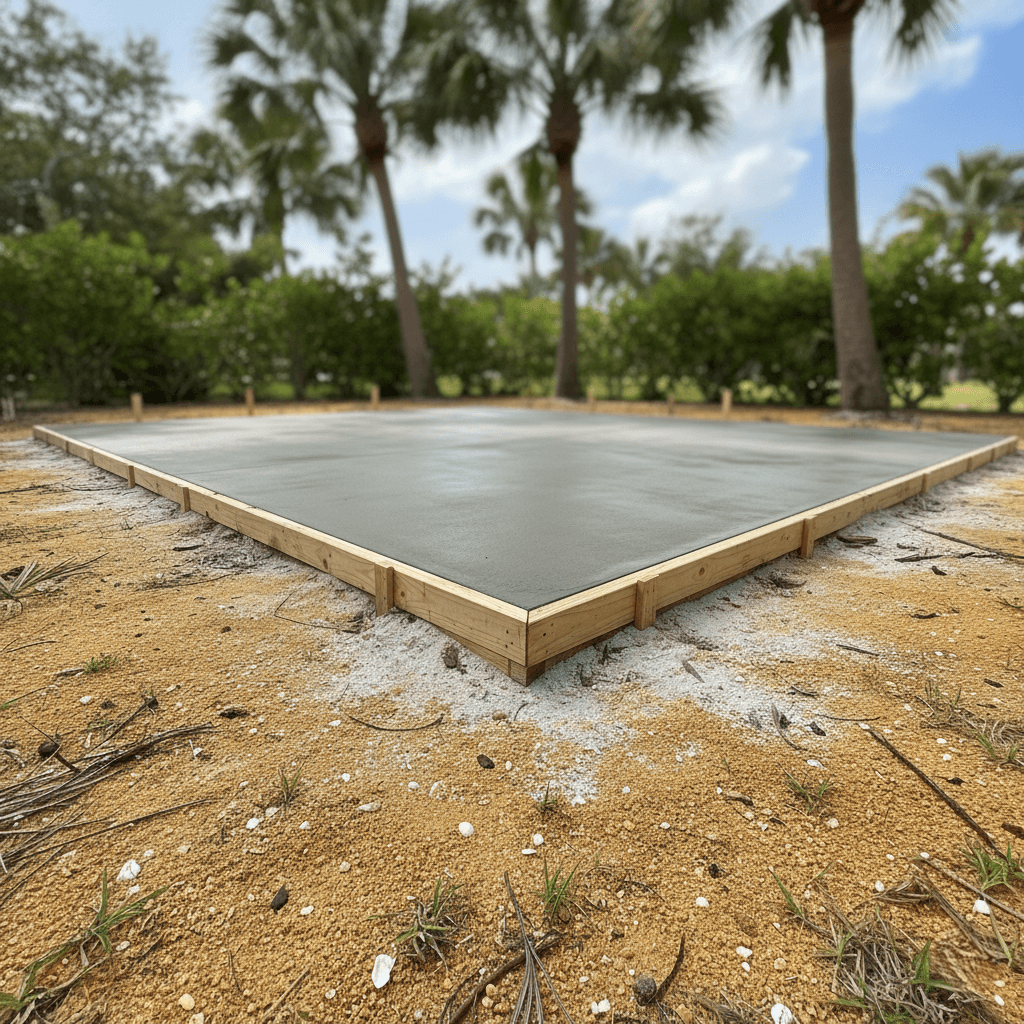
A concrete slab is a level, horizontal area of concrete. Depending upon what it will support, slabs are between four and twelve inches in thickness. A concrete slab can act as a building foundation, an interior floor, or provide a base for equipment, storage, or work areas.
Components of a Concrete Slab:
Soil Base – Subgrade Preparation: Before you pour the slab, you have to prepare the soil below it by leveling, compacting, and stabilizing it so that when you place the slab, the slab will not sink and crack due to settlement.
Aggregate Base – Base Layer: Crushed aggregate, such as gravel, is applied before placing the slab. This base layer allows water to drain under the slab, helps prevent moisture wicking into the slab, and allows for an even load distribution.
Vapor Retarder – Vapor Barrier: To prevent ground moisture from rising through the slab, a vapor barrier is placed underneath the slab. A vapor barrier protects the building or structure above and can help prevent damage caused by moisture.
Reinforcement – Reinforcing Rebar / Welded Wire Mesh: When concrete is in tension, whether it’s from drying shrinkage, temperature changes, etc., rebar or welded wire mesh embedded in the concrete provides additional tensile strength to the concrete. It also helps control cracking as the concrete dries and becomes stressed.
Concrete Mix – Concrete Strength and Performance: For a concrete slab to last over time, the right amount of cement and sand needs to be added to the mix, along with the right strength (PSI) to support the expected weight and use.
Control Joints – Directing Cracking: Strategically cutting or grooving the slab directs where cracks will occur in the event they do happen. Control joints maintain the structural integrity of the slab while still allowing for visual appeal.
Benefits of Concrete Slabs
Why Concrete is the Superior Choice
Concrete slabs have demonstrated an ability to bear an incredible amount of weight: Concrete slabs have demonstrated an ability to bear an incredible amount of weight, resist environmental degradation, and remain structurally intact for 50 years or longer with little to no maintenance.
Resistance to Moisture and Pests: Concrete does not deteriorate due to exposure to water and does not encourage fungal growth or pest infestations, which are common problems associated with wood foundations; thereby protecting both the structure and the contents stored on a slab.
Structural Integrity: A properly laid out concrete slab provides an unyielding, level surface that will neither shrink nor settle over time. The stability provided by a concrete slab is essential to maintaining the structural integrity of buildings, equipment, and vehicles.
Heavy Load Bearing Capacity: Concrete slabs can be designed to accommodate enormous weights ranging from a residential storage unit to heavy industrial equipment, and far exceed the load-bearing capacity of wood or gravel.
Low Maintenance: Concrete slabs require virtually no maintenance once they have been placed. Due to their durability, they will never need to be replaced or refinished, repaired, or otherwise maintained as would other types of foundation material.
Variety of Uses: For applications such as a small shed foundation through a large commercial floor, concrete slabs can be used for almost any application and can be modified to meet your specifications.
Cost-Effective Over Time: While the initial cost of a concrete slab may exceed the initial cost of a temporary alternative, the long-term value of a concrete slab is cost-effective because of the low maintenance needs of a concrete slab.
Resistant to All Types of Weather: Concrete has shown itself to perform extremely well in the hot and humid climate of Florida; it will not experience the same type of thermal expansion that most building materials do, and it will not deteriorate from prolonged exposure to the elements.

Our Slab Installation Process
Engineering Precision at Every Stage
Initial Project Requirements and Site Conditions Assessment: We review your project’s needs, assess site conditions, which include site soil types and drainage conditions. We also have a conversation with you about how much weight your intended use will be, and we figure out what slab specs would be best suited for your use case.
Engineering and Planning: We take our previous site assessments, and we develop the right slab thickness based off those assessments, we identify and quantify the amount of reinforcement that will be needed to support the structural integrity of the slab, we create an engineering plan for where the control joints should be located, and we select the PSI (pounds per square inch) of the concrete that will be used as well as we plan for how the slab will drain.
Site Preparation: The initial step in preparing a site is to clear and level it, and we excavate the site to the required depth. We then remove any unsuitable soil or organic materials and grade the site so that water will drain properly away from all structures. Finally, we compact the sub-grade area to help reduce the likelihood of future settlement of the slab.
Base Installation: After the site has been prepared, we then install the base material of either crushed stone or gravel to the required depth. We then compact the base material to provide a solid foundation for the slab. We need to make sure that the base material is installed to the correct depth and is level across its entire width and length to provide the necessary stability. Additionally, we want to create a pathway for water to flow underneath the slab.
Installing Vapor Barrier: For most applications, we install a heavy-duty polyethylene vapor barrier over the base material. We want to make sure that we properly overlap all of the seams and that we extend the vapor barrier all the way to the edges of the slab to prevent moisture from the ground from migrating through the slab.
Forming and Rebar Installation: We construct precision forms to define the dimensions and thickness of the slab. Once the forms are built, we install and secure the rebar or welded wire mesh into the slab at the correct height. We then connect the rebar or welded wire mesh at each intersection to keep the rebar or welded wire mesh from moving. Finally, we place chairs or supports under the rebar or welded wire mesh to maintain their position while the concrete is being poured.
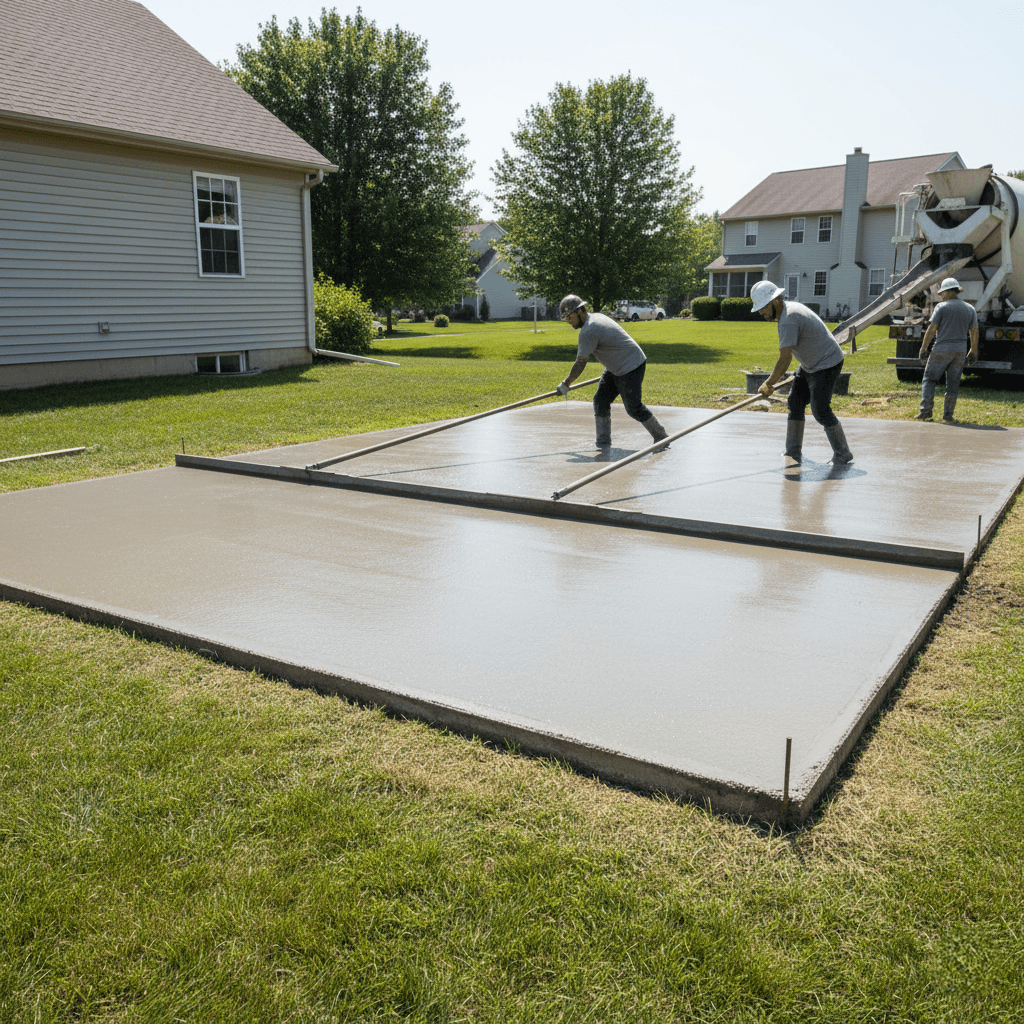
Concrete Pouring: We deliver high-quality concrete that meets the specific requirements for the project, and we pour the concrete in a systematic fashion. During the pouring process, we want to make sure that there are no voids in the concrete, so we spread the concrete, and then we consolidate it to eliminate air pockets. After the concrete is poured, we then screed it to the correct level and grade, and we work quickly to allow the concrete to cure uniformly.
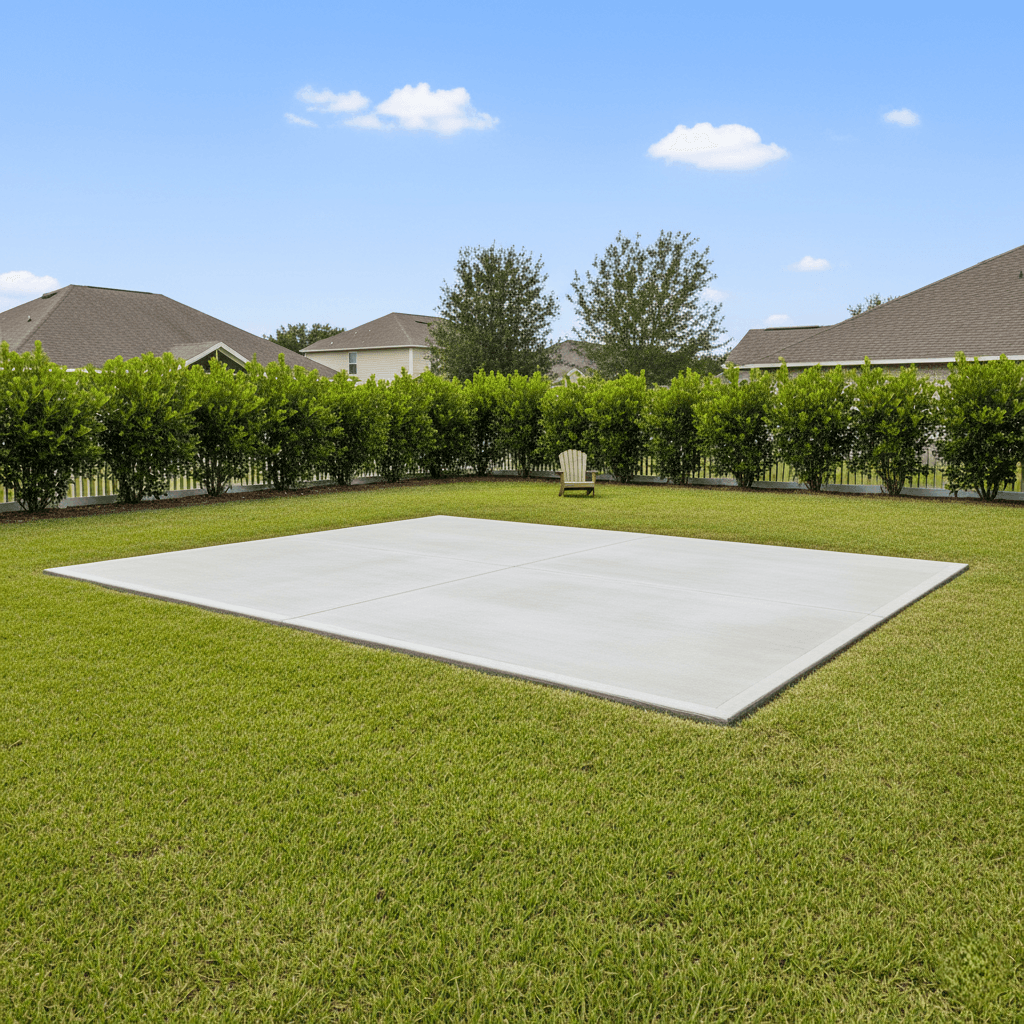
Finishing: Depending on your project needs, we can finish the surface of the slab in one of three ways: float finishing provides a textured surface; troweling produces a smooth surface; and brooming creates a traction surface. In addition to finishing the surface of the slab, we also create control joints at regular intervals to help the slab expand and contract without cracking.
Curing: Proper curing of the concrete is very important for developing the strength of the concrete. To cure the concrete properly, we need to protect the concrete from losing too much moisture rapidly, and we need to maintain the correct temperature. Finally, we need to give the concrete enough time to fully cure before placing any loads on it.
Final Inspection: Prior to completing the project, we inspect the completed slab to ensure that it has the proper thickness and that it does not have any surface imperfections. We also check to see if the surface of the slab is sloped properly to allow water to run off, and we check to see if the control joints were created properly. Finally, we clean up the job site after the inspection is complete.
Slab Specifications and Standards
Engineered to Meet Structural Specifications
Slab Thickness Recommendations:
Light Duty (4″): Sufficient for use with smaller structures, foot travel, and limited weight from light machinery and/or equipment.
Standard Residential (5″-6″): Sufficient for garage use, shop construction, building storage, and typical vehicle use.
Heavy Duty (6″-8″): Will be required for parking RVs, storing boats, and heavier type equipment, as well as general business use that has high traffic volume and weight usage.
Industrial (8″+): Needed for warehouse, manufacturing facility, and unique situations that have extreme load requirements.
Concrete Strength:
For residential use: a minimum strength of 3000 psi is recommended for general purposes; 3500-4000 PSI is recommended for longer-lasting performance.
For commercial use: 4000-5000 PSI is recommended based upon traffic and load conditions. Higher strength may be necessary for other types of commercial use.
Reinforcement Guidelines:
Wire Mesh: A 6″ x 6″ 10-gauge welded wire mesh in the top one-third of a standard residential slab thickness is acceptable.
Rebar Grid: For heavy-duty use, #3 or #4 rebar spaced at 18-24″ grid intervals should be used, with each intersection tied and raised.
Synthetic Fibers: In some applications, synthetic fibers can be added to the concrete to help with controlling cracks.
Joint Control:
Joints should be located at intervals not exceeding 2-3 times the thickness of the slab: (example: a 4″ thick slab would require joints located at 8′-12′ intervals). This will allow for proper control of shrinkage cracking.
Moisture Protection and Drainage
Preventing Future Problems
Importance of Vapor Barrier: Moisture always migrates upward in the ground by capillary action. If you do not have a vapor barrier, this moisture will penetrate your concrete and may result in:
- Mold and mildew
- Musty smells in confined spaces
- Damaged merchandise
- Failed floor coverings
- White efflorescence mineral deposits on the slab surface.
All slabs are installed with at least 10 mils of polyethylene as a vapor barrier for areas requiring maximum moisture protection.
Drainage Solutions
Slope: The slabs are properly sloped to allow water to drain off of them. Water puddling beneath a slab could weaken the edge of the slab or create unsafe conditions.
Perimeter Edge Drainage: For slabs located in low-drainage situations, we can install perimeter edge drains, which will capture and redirect the water away from the foundation.
Roof Drains and Gutters: We make sure that roof drains and downspouts do not drain water onto slabs, as this could erode the soil and compromise the structural integrity of the building’s foundation.

Ready to Build Your Foundation?
Schedule Your Free Slab Consultation Today
Whether you need a foundation for a new structure, a workshop floor, equipment pads, or commercial space, Pembroke Pines Concrete Solutions delivers precision-engineered concrete slabs built to last.
Contact us today to discuss your project requirements and receive a detailed estimate. Our experienced team is ready to provide the stable foundation your project deserves.