Pembroke Pines Concrete Solutions

Menu
Timing Concrete Pours Around Afternoon Rain in Pembroke Pines
Pouring Concrete Pembroke Pines
Any concrete installation relies on proper curing conditions. In Pembroke Pines, that means dealing with the frequent afternoon thunderstorms. Pouring concrete at the wrong time can wash out the material or compromise its strength. Local knowledge of the weather patterns is non-negotiable for contractors. Planning is key to a flawless finish in this crazy climate.
Scheduling for Early Morning Starts
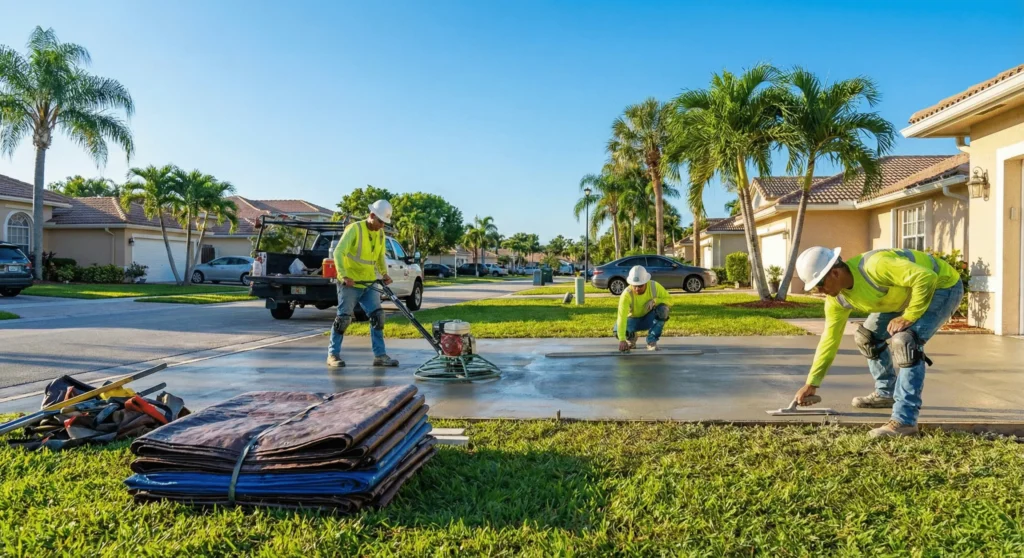
Concrete contractors always try to finish the pour and initial finish before noon. We want to give the concrete several hours of setting time before the afternoon showers start. We mix and pour as early as the job allows. This gives the concrete enough time to develop some structural integrity to resist surface damage from rain. A timely start is the first line of defense against the weather.
This early timing is also good because the morning temperatures are lower. Lower temperatures slow down the initial hydration process slightly and make for stronger concrete. We coordinate material deliveries so there are no delays on the day of the pour. Time is of the essence when dealing with unpredictable weather. We respect the clock when pouring concrete in Florida.
Monitoring Localized Weather Forecasts
South Florida weather can change dramatically over a short distance. We use hyper-local forecasts and radar, not just general regional forecasts. A storm forecasted for Fort Lauderdale might skip Pembroke Pines altogether. But we always err on the side of caution and are prepared. We track the storm cells moving across the Everglades towards the metropolitan area.
If the chance of rain exceeds a certain threshold, we reschedule the pour altogether. Rushing a job to beat the rain always results in a flawed finish. We prioritize quality over speed when Mother Nature is involved. Clear communication with the homeowner about potential delays is key. Our commitment is to a great final product.
Using Protective Covering Strategies
Even with planning, unexpected sprinkles can happen. Professional contractors always have heavy-duty plastic sheeting and tarps on hand. We cover the freshly poured area as soon as the first drop of rain hits. This quick action protects the surface from pitting or aggregate washout. Water mixing with the cement paste weakens the top layer. The covers must be secured tightly to prevent wind damage. They create a temporary micro-environment for the concrete to set without interference. We remove the covers only when the rain has passed, and the surface is ready for the final finish. Knowing how to protect the work is just as important as the pour itself. This preparation saves expensive rework.
Managing Humidity and Curing
Humidity in Pembroke Pines affects the concrete mix and curing time. High humidity in the air means the surface water evaporates very slowly. This can delay the finishing process and make it hard to achieve the final smooth finish. Intense sun can accelerate the surface cure and cause plastic shrinkage cracking. We have techniques to mitigate both risks.
We sometimes apply evaporation retarders during the finishing stage. These compounds keep the surface workable longer when it’s sunny and dry. Proper curing is achieved by keeping the slab damp for several days after the pour. We use curing blankets or continuous fine misting for this purpose. Our local knowledge of the humid environment guarantees maximum concrete strength.
Adjusting the Mix Design for Humidity and Heat
High temperatures and humidity demand specific adjustments to the concrete mix. We work with our suppliers to adjust the slump—the consistency of the concrete. In hot weather, we use chemical admixtures, water reducers, or retarders. These components slow down the setting time and give the crew more time to finish the surface before it gets too stiff.
We control the water-to-cement ratio to ensure optimal strength and prevent rapid drying. The mix temperature is also monitored; cooler concrete sets more slowly. These proactive steps counter the harsh Florida environment. Using a standard mix design in this climate is a recipe for surface defects. We tailor the concrete recipe for local conditions.
The Consequences of Improper Wet Curing
If heavy rain hits immature concrete, the consequences are severe and permanent. The most common issue is surface pitting or “pocking,” where the water washes away the fine cement paste and exposes the aggregate. This leaves a rough, weak surface prone to scaling and early wear. Strength reduction is also a major concern, as the excess water dilutes the concrete mix. Additionally, rapid drying (if the sun hits the concrete immediately after the rain) can cause severe map cracking or crazing on the surface. These defects ruin the appearance and long-term integrity. We always aim to prevent these defects by scheduling and protecting. A compromised pour means expensive demo and replacement down the line.
Conclusion
Any concrete project success depends on timing and weather mitigation. Starting early, monitoring the radar, and being prepared to cover the work are standard practices. This attention to detail keeps your new slab looking great and intact. Never underestimate a Florida afternoon storm.
We have the science of pouring concrete down to a science. At Pembroke Pines Concrete Solutions, we plan every project to account for the rain and humidity. Our expertise gives you a strong and durable foundation or pavement for your home. Contact us today to schedule your project.
LATEST POSTS
Timing Concrete Pours Around Afternoon Rain in Pembroke Pines
December 13, 2025
No Comments
Concrete Walkway Layouts for Narrow Pembroke Pines Side Yards
December 11, 2025
No Comments
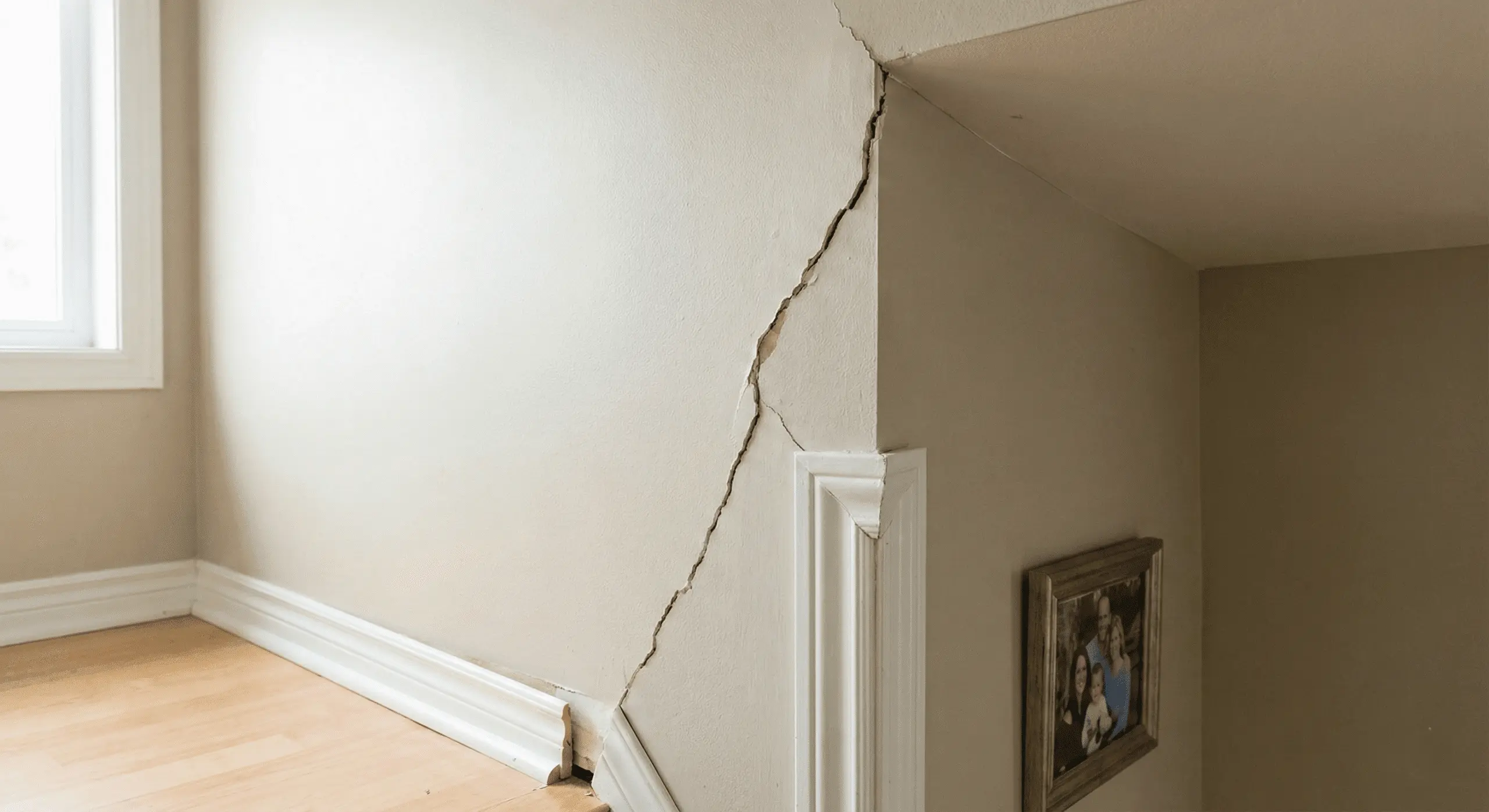
Signs of Foundation Shifts in Pembroke Pines Two-Story Homes
December 9, 2025
No Comments